
Hybrid trial platform components for CROs and sponsors
One platform that replaces several separate vendors for hybrid studies. CTMS, EDC, eConsent, ePRO, remote patient monitoring and the CONNECT integration layer can be used individually or together.
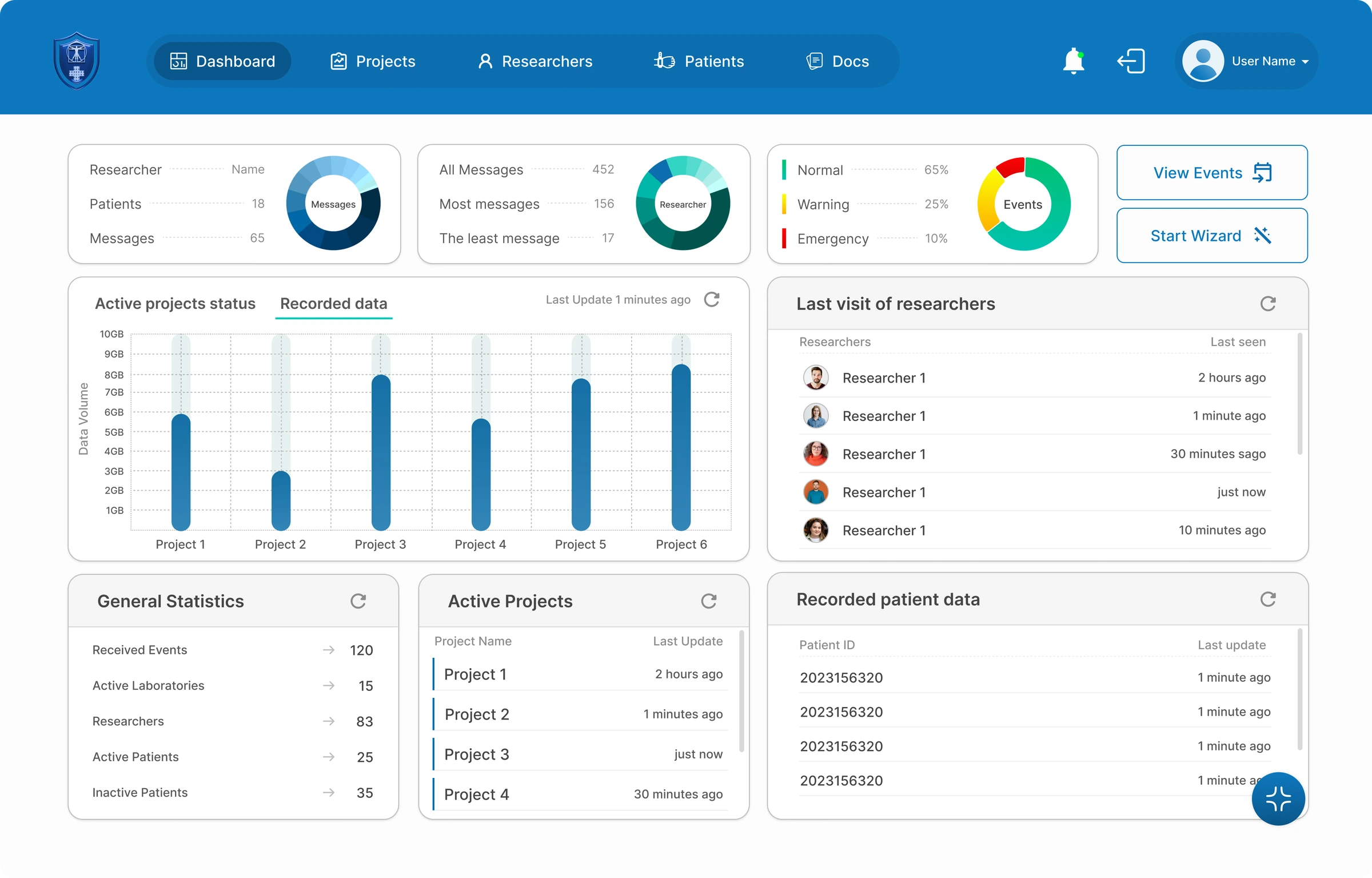
Platform screen with placeholder data
Why consolidate
Fewer systems for sites. One dataset for the study team.
One platform in place of several vendors
Sites and study teams work in one system for consent, data capture, patient-reported outcomes and monitoring.
One component or all of them
Add eConsent or ePRO beside the EDC you already use, or run the whole study on the platform. The CONNECT integration layer links the components to your existing systems.
Platform modules
Five modules are available today and AI Analytics is in development. Use them individually or together, with the CONNECT integration layer for the systems you already run. The status of each module is stated on its card.
ICH E6(R3) readiness
The ICH E6(R3) principles and Annex 1 have applied in the EU since 23 July 2025. Annex 2, on decentralised and pragmatic trial elements, applies from 15 January 2027.
The platform is designed to support sponsors and CROs in meeting these expectations: remote consent, data from digital health technologies and investigator oversight of activities outside the site. This is a design statement, not a certification.
Sponsor validation and vendor-qualification pack
The documentation sponsors and CROs need to qualify the platform as a vendor.
Delivery schedule agreed in the written proposal.
CRO partnership
Small and mid-size CROs can offer the platform to their sponsors under partner terms. The CRO keeps the sponsor relationship and runs the study; Vitruvian Shield supplies and supports the platform.
Proposal and study set-up
A written proposal within one week of scoping. Your study set-up plan and go-live date are agreed in the written proposal, before any commitment.
One platform, three service levels
Level 1
You run it
You run the study on the platform with your own people and sites. We set the platform up and support it.
Discuss this level: You run itLevel 2
We run it
Level 1 plus data management, monitoring and the annual report by Vitruvian Shield.
Discuss this level: We run itLevel 3
We bring the hospital
Level 2 plus subcontracted clinical sites.
Discuss this level: We bring the hospitalThe level is chosen at scoping and set out in the written proposal.
How we workWho it is for
Teams that need hybrid components without building their own tools.
Small and mid-size CROs
Contract research organisations that need a modern platform for hybrid studies without building their own tools.
Academic medical centres
University hospitals and academic research networks running investigator-initiated trials and observational studies.
Investigator-initiated studies
Individual principal investigators funded through grants (Innosuisse, NIH, Horizon Europe) who need a turnkey platform.
Hospital research units
In-house research units at hospital networks that want to standardise data capture across the institution.
Questions and answers
Questions about the hybrid trial platform
What is the hybrid trial platform?
One platform that replaces several separate vendors for hybrid studies: CTMS, EDC, eConsent, ePRO, remote patient monitoring and the CONNECT integration layer. The components can be used individually or together. The configuration for CROs and academic medical centres is called Vitruvian Shield RESEARCH.
How does RESEARCH differ from CONNECT?
RESEARCH is the study configuration for CROs and academic centres. CONNECT is the integration layer for sponsors and CROs on Medidata, Veeva or Oracle stacks who want to plug wearables, biosignal streams and study modules into the enterprise systems they already run.
Who runs the study?
Three layers run a study: sponsors own the study and the EDC, CROs run the study, and vendors supply the evidence layer. Vitruvian Shield sits in the vendor layer. Three service levels define how much of the operation the Vitruvian Shield team takes on.
What evidence exists for the platform in real studies?
Studies in preparation include an oncology electronic survey study at ULS Coimbra and PT-EPI-DCT-002, decentralised seizure monitoring in adult epilepsy, at ULS Santa Maria. An independent key-opinion-leader expert review was completed on 28 May 2026 through Instituto Pedro Nunes; it is an expert opinion, not a study result. No peer-reviewed output has been published yet. ULS Santa Maria is a partner under a non-binding letter of intent.
Which data exports are provided?
The platform is designed to deliver CDISC and HL7 FHIR exports so home-collected data lands in the sponsor's existing EDC and analysis environment with its provenance and audit trail intact.
Talk to us about your next study
Tell us about the protocol, the countries and the devices. We will show you how the platform would run it.